
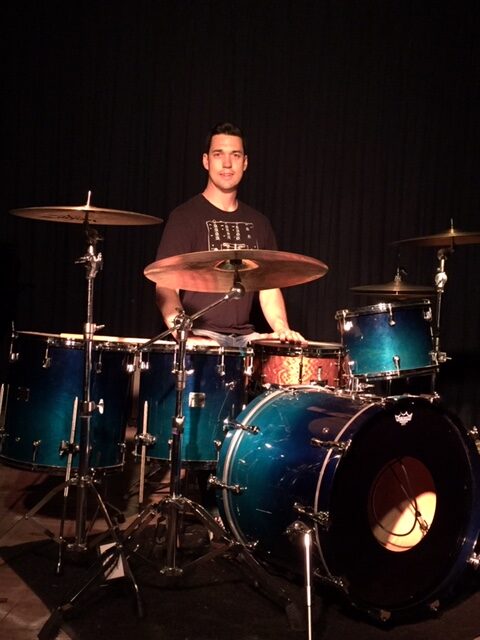
This day and age in the California home studio world, drummers are using a wide variety of drums and percussion for recording. With advancements in technology, it is becoming easier and easier to record great sounding songs with minimal equipment. That being said, the better gear you have at your disposal, and the better the studio performance, the higher the overall quality will be of the song or album. This will ensure a better product when it’s time for mixing and mastering. Remember, it is nearly impossible to fix something that is recorded poorly.
Name brand shmame brand. Most drum companies out there have several different lines of equipment geared towards beginners, intermediate and professional session drummers. Most household brands, such as Yamaha, Gretsch, Ludwig, Tama, Sonor, Pearl, Mapex, and Premier have outstanding top of the line drum sets that record brilliantly in the studio. It all depends on the drummer’s (or engineer/producer’s) ears.

(4 piece Yamaha 22×18, 12×10, 16×16)
There are many different characteristics that affect the overall tone of the drum including but not limited to, the type(s) of wood a drum is constructed with, the shell thickness (plies) and the size (width and depth) of the drum, as well as the type of drum heads used (coated, clear etc…).
Unfortunately, the price tag on pro level equipment can be a little daunting. Fortunately, these drum companies often make intermediate level drums at a more affordable price range. In some cases, the differences between the two are minimal, and many drummers might say you really do not need all the bells and whistles that come with these higher end drums. If you have a good set of mics, great preamps and a decent sounding room, you could potentially record drum sounds that are close to those recorded in a studio.

(6 piece Yamaha 20×16,10×9, 12×10,14×14,16×16)
Another option that has improved dramatically over the years is recording with electronic drums. You can record the audio of the pre-programmed drums from the drum brain as a stereo signal. This is the easiest method, but gives you the least amount of control over the recording.
Since the signal is a single stereo track, you will not be able to go in and tweak individual drums. Another way is recording MIDI notes with an electronic drums and using one shot software samples from your DAW or favorite drum packs to create and shape custom drum sounds to your liking.
If any of this is starting to go over your head or does not seem like an option that works for you for whatever reason, have no fear. It is possible to hire a remote session player that already has all these options in place and is ready to record custom drum tracks just for you.

In my home studio, I use several drum sets made by Yamaha, Ludwig, and Gretsch. Each is constructed with contrasting types of wood, like maple or birch and are composed of various sized drums. I also have a wide range of snare drums to get just the right crack for that super fat n’ stupid funky back beat you are looking for. It does not stop there.
I have a collection of percussion instruments from all over the world, including shakers, bells, and hand drums. I even have percussion instruments I have made myself to produce unique sounds and textures that could add that extra special sound for your project.
All these options in my home studio allow me the versatility I need to capture the best possible sounds and feel, guaranteeing that all my clients will always get exactly what they want. If acoustic drums and percussion still just aren’t your jam, no worries. I am an experienced MIDI programmer and can create custom beats just for you as well.
Any queries? Hire a pro music drummer in California that walks the talk!